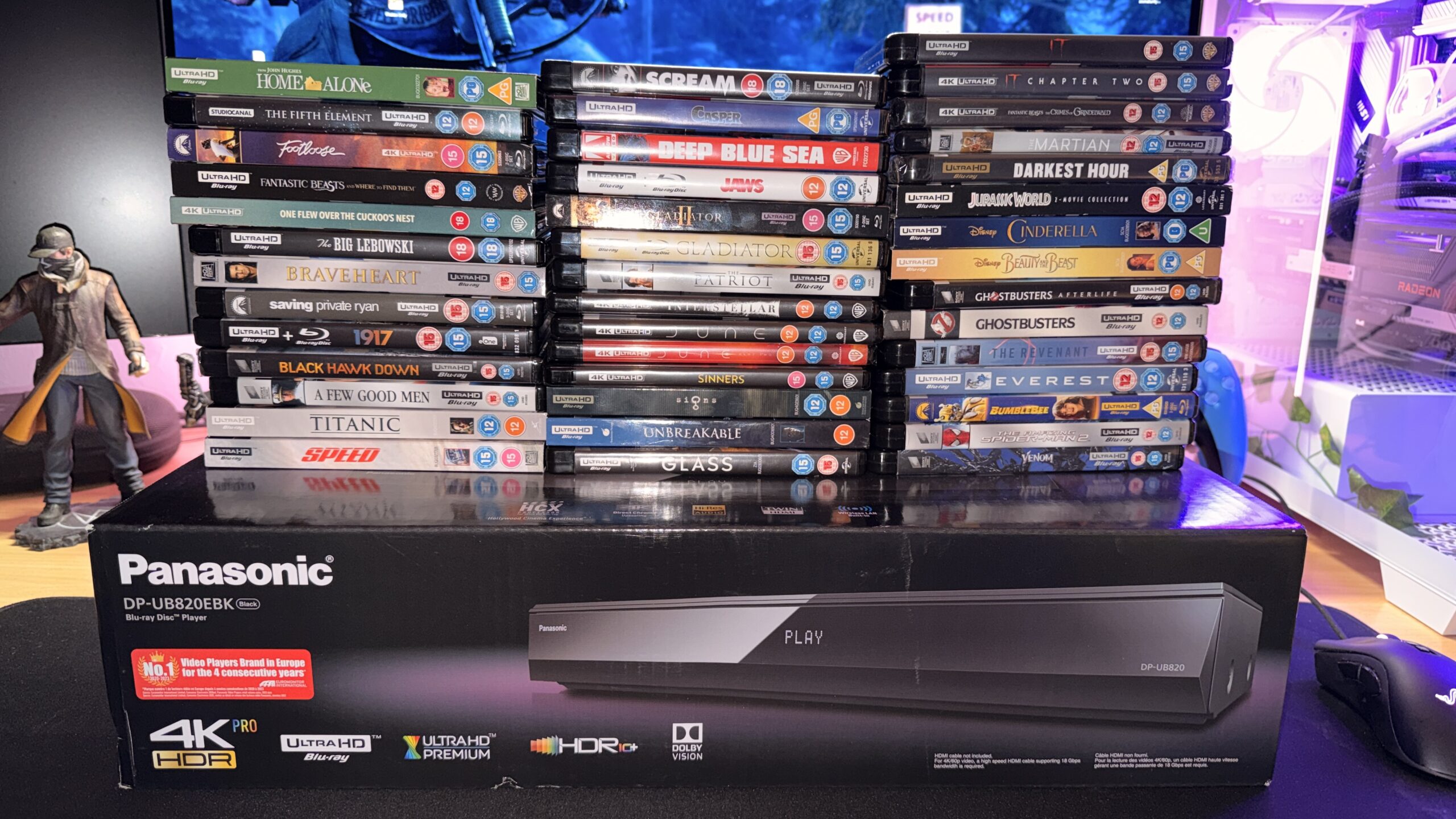
When it comes to collecting and watching movies, the process can be more complicated than one might expect, as not all discs get created or remastered equally. Sometimes higher-level formats include terrible filters or colour grading that ruins the experience. So, it's not as simple as investing in the superior format; it's about researching each movie individually, which can get frustrating and exhausting.
Everyone has a preference for how they consume specific media, from streaming to physical, and even then, physical media splits into discs and tapes, including VHS, DVD, Blu-Ray, Ultra HD Blu-Ray, and extinct formats like Laser Disc and HD-DVD. For this segment, we'll focus solely on the Blu-Ray standards, both of which are vastly superior to DVD, providing detail and clarity that surpasses streaming quality. Although that's a simplified response for visual clarity, it omits technologies such as IMAX, Dolby Vision, and Dolby Atmos, which streaming often provides, even upgrading some existing content seamlessly.
Only As Good As The Hardware
There's a reason some people invest heavily in expensive premium setups, from visual to audio. Whilst everything in a platform-specific category can process and play media, some hardware has limitations, such as missing technologies like surround sound, HDR, and other modern features. Premium hardware can likely process video and audio to a higher standard than cheaper options, so although the discs contain the same data, the hardware that processes them may read and display them at different qualities.
For instance, playing movies on PlayStation and Xbox video game consoles is convenient and a wise, money-saving way to enjoy disc-based content. The software on the devices has limitations, so modern features such as Dolby Vision and Dolby Atmos are missing. More significantly, they can be temperamental with software issues and disc-reading problems. Although cheaper alternatives exist for processing disc-based movies, the level of investment we're prepared to make affects the quality of the experience.
Standard HD Blu-Ray
Quite honestly, I've been blown away and impressed by the visual and audio quality of Blu-Ray compared to DVD. I still buy some DVDs because in the UK, some films never got an upgrade beyond DVD, and I even have some rare VHS tapes that never made it to disc. Aside from those instances where a movie wasn't available on Blu-Ray, there's no sense in collecting DVDs anymore. Blu-Rays, especially used or second-hand, from retail outlets and places like eBay, are often priced similarly to DVDs. Not only is Blu-Ray a superior format in quality and fidelity, but the discs themselves are more robust and less prone to scratches, making them more reliable and future-proof.
Most people have video game consoles, and pretty much anything from the past 15 years will play Blu-rays; even then, dedicated Blu-Ray players aren't much more expensive than DVD players. I've had my Samsung BD-5100 Blu-Ray player for many years, and it's still going strong, performing great, though it perhaps lacks some modern features.
The upgrade from DVD to Blu-Ray was significant; the difference is immediately apparent, with visual fidelity on par with, and sometimes surpassing, 4K streaming. The discs provide a higher bitrate than streamed content, and upscaling works brilliantly, whether it's the player upscaling or a TV upscaling the video, the results are fantastic. But results will vary depending on the hardware. A low-budget TV is unlikely to display similar colour depth or process lower-resolution content as well as a premium TV. Likewise, the dedicated player will have its own processor. However, in all cases Blu-Ray makes DVD seem dated and unnecessary, and surprisingly, it can make the upgrade to Ultra HD Blu-Ray questionable.
I'm quite often surprised by how crisp and clear Blu-Ray is; after all, there's a superior tier available. It's hard to think how movies could look and sound any better. Blu-rays that good! I've switched back and forth between all formats, including streaming, trying to find discrepancies, and I rarely see much that makes standard Blu-rays seem redundant. Price-to-performance: they are the best investment, and it's easy to curate a large movie collection without feeling guilty or poorer. Many Blu-Ray discs cost about the same as renting movies in the 90s and early 2000s, and sometimes even less. When you consider that, buying a movie is much like renting, but instead of returning it, we can watch and enjoy it again and again because we get to keep the full value of our investment.
Blu-Rays tend to range in price from £1 to £9.99, but it's normal for brand new releases to launch at £14.99. Prices soon drop once a movie's hype calms down. I often buy used Blu-rays for £2- £3, and in many instances, 4 for £5 or £8. It's not expensive, and the quality's comparable to 4K streaming, just without colour enhancements like HDR or Dolby Vision. Whilst some modern Blu-Rays feature Dolby Atmos, older players don't support it, and across the large library of movies, it's not particularly common.
4K Blu-Ray
It stands to reason that the most premium format would be the best, and 4K Blu-Ray is the best, period. The visual fidelity and audio quality are the best. Streaming can't be genuinely compared due to compression and a vastly lower bitrate, which gets split between video and audio. Quality compromises exist; most people don't look closely enough to notice. That shows that whilst alternative formats may be less pristine, they are more than serviceable. So the issue with 4K Blu-Ray isn't whether it's the best, because it most certainly is, it's whether the price difference warrants the higher costs. For movie aficionados or those with larger bank balances, it's a no-brainer to go for the best, but for some of us, we need to balance price and value.
As mentioned before, the quality of standard Blu-Ray upscaling is truly breathtaking. I switched back and forth between 4K Blu-Ray and could barely see any difference sitting 8-9 feet away. The standard variant was comparable to the premium format, which was surprising because standard HD Blu-rays render at 1920x1080 (1080p), whilst 4K Blu-rays render at 3840x2560 (4K). That's apparently a x4 resolution difference, which should display vastly different results. The quality of the upscaling on modern TVs, or the Blu-Ray player, performs remarkably well, making standard Blu-Ray discs a great option for the majority of people, not least because they are cheaper, but 4K Blu-Ray discs are very delicate. The slightest scratch could cause playback issues, thus ruining the entire movie experience.
Whilst the visual clarity between an upscaled HD Blu-Ray and a native 4K Blu-Ray appears similar, especially to the average person, myself included, I can still notice slight differences. Still, they're hardly enough to warrant an entire movie collection upgrade on their own. The biggest benefits of 4K Blu-Ray are the colour depth and audio quality. Dolby Atmos is truly amazing. With the right setup, it can seem as though you're experiencing the movie around you. Footsteps of someone walking down stairs, wind bristling past, it's such an immersive experience that it's hard to fathom watching movies without it, but we need the hardware to support it from the player to the audio setup. A large portion of 4K Blu-Rays support Dolby Atmos, whilst not many HD Blu-Rays do, so the audio upgrade alone can be worth the investment.
Colour depth isn't something I used to think about, but witnessing it, it's hard to transition back to the flat standard seen in HD Blu-Ray and the formats before it. 4K Blu-Ray provides colour gradients, which transform every scene into a work of art. I consider the entire 4K Blu-Ray experience like being at the cinema. It's not about one part of the process being so much better than other formats; together, they make anything else feel less enjoyable.
HD Blu-Ray vs 4K Blu-Ray Differences
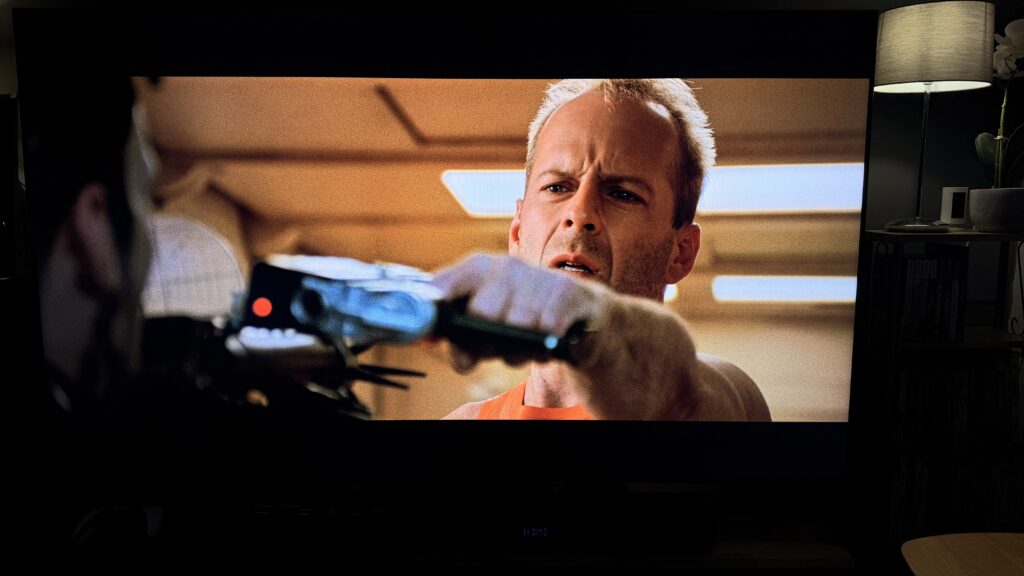
4K Blu-Ray played on Panasonic UB820
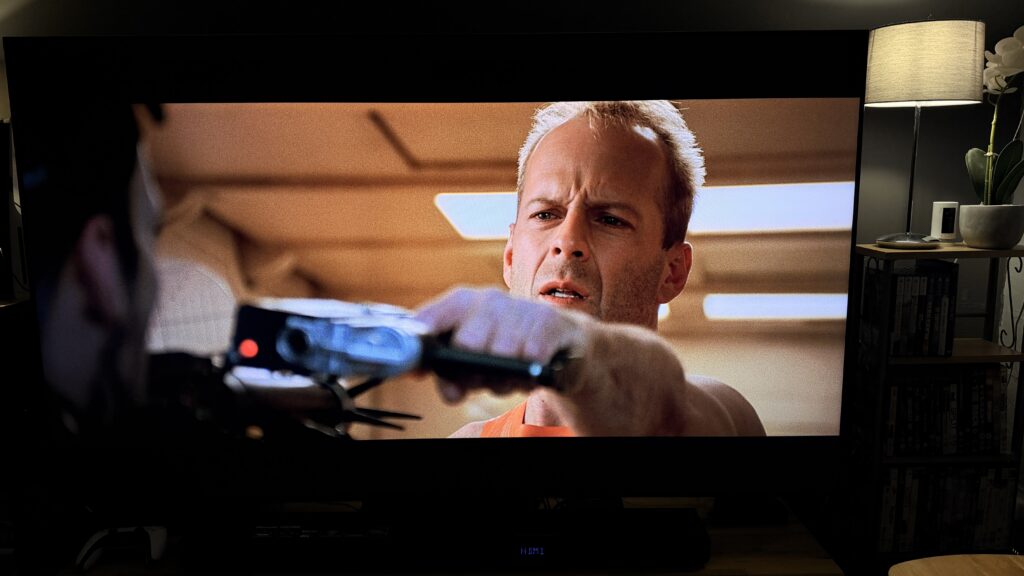
HD Blu-Ray played on Samsung BD-5100
Looking closely at the two images I captured on my iPhone 17 Pro with the same camera settings, the clarity is almost identical. Still, the 4K version has superior colour depth, which transforms the scene. So, it's not the clarity that really sets the two apart, but the significant difference in colour and audio. In this instance, the movies were captured on different hardware, primarily because I was trying to decide whether my recent 4K Blu-Ray investment was worth the cost, or whether it would be wiser to revert to HD Blu-Ray.
Whilst there may, and likely would be a little colour improvement to the HD Blu-Ray using the Panasonic UB820 4K Player, testing with that made no sense, because if I were to continue using that player, I may as well invest in 4K Ultra HD movies to make the most of the hardware.
Value
Everyone's wants, needs, and budget will influence spending and investment. I absolutely love the 4K Ultra HD Blu-Ray format, and the upgrade across the board is worth it to me within reason. The difficulty for me is that I already have a vast DVD and HD Blu-Ray collection. Upgrading that would be prohibitively expensive, and switching back and forth between 4K and HD would make me aware of what's missing from traditional Blu-Rays. On the one hand, by not investing in 4K, I would get to enjoy similar image clarity whilst remaining ignorant of the enhanced colour depth found on 4K. More significantly, it wouldn't cost me much to add a few more HD Blu-Rays to my collection, whereas adding 4K would be expensive.
Since I'm not someone who can indulge a little here and there and build over time within reason, I would want to upgrade and have everything all at once, which isn't a reasonable expectation. But, on the other hand, by owning 4K Blu-Rays, you know, you're experiencing the best in home entertainment, and in that regard, the extra expense may be worth it.
There have been reports that 4K discs fail, struggle to read, are vulnerable to scratches, and even the players themselves encounter problems, raising concerns about the long-term viability of playing 4K discs. In contrast, HD Blu-Rays are resilient, and there are plenty of Blu-Ray players in circulation, so if something breaks, it's easy and affordable to replace the player and the discs themselves.
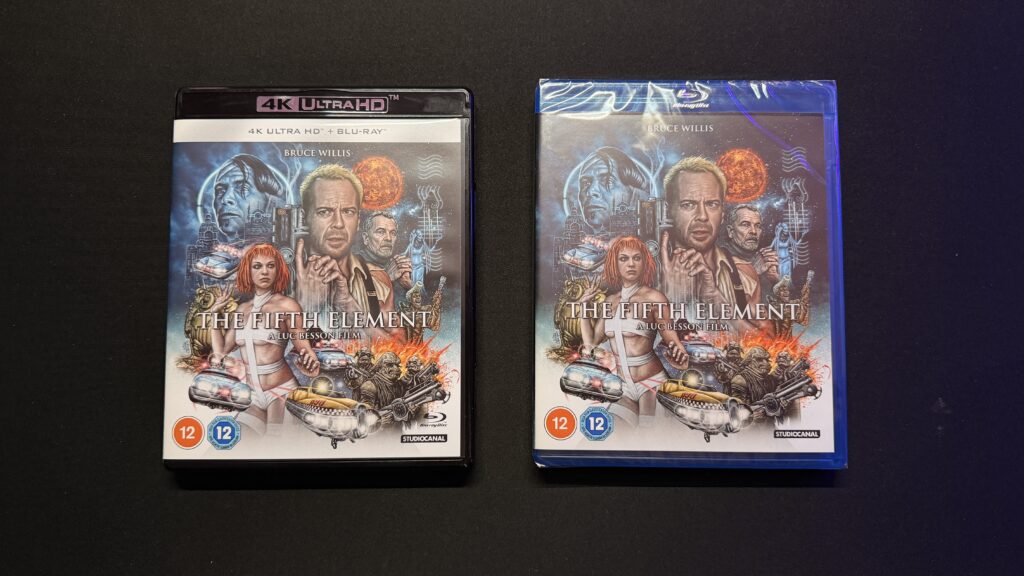
It hasn't been an easy decision: whether to invest in 4K or make peace with HD Blu-Ray remaining the best standard in my collection, at least for the most part, because if I walk away from 4K, I would still own some discs. As someone who already has a vast physical media collection, starting over, upgrading, and adding to it becomes more expensive than I planned or expected. Of course, we can start with video game consoles, but we miss out on premium features like Dolby Vision, which can negate many of the benefits of 4K. At least it would default to HDR10, which is better than not having it; it's missing from HD Blu-Ray. But the vulnerable discs make me nervous, and the cost of building a collection worries me too.
Cost
It's not all doom and gloom. I've bought some 4K Blu-Ray movies used for between £5 and £10, but budgeting so low only allows for a limited selection of movies to purchase. New sales are common, especially on Amazon, with 4K discs featured in 2-for-£30 and 3-for-£50 deals, but even then, it's common to find new HD Blu-Rays for £7.99 or less.
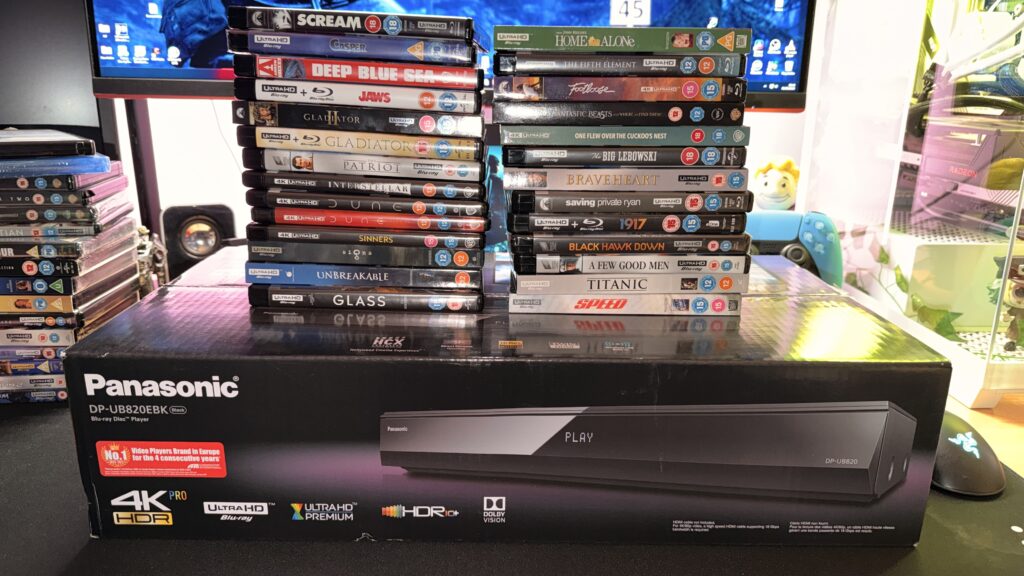
I went a little wild buying a Panasonic UB820 4K Blu-Ray Player on Amazon for £349, along with many new 4K Blu-Rays in the deals mentioned above, and some used movies too. But I didn't realise how much I had been spending. I got carried away, and I worry I might keep wanting to replace my entire physical media library with 4K Blu-rays, but would it be good value for money? As great as the movie's upgrades are, I don't think the average person upgrading would find them worth it. Perhaps if someone were starting a physical media collection from scratch, it could, but then for every 4K Blu-Ray, someone could own 3 to 8 HD Blu-Rays, and that's a significant difference, especially considering the used HD Blu-Ray market is larger, cheaper, and more varied than the 4K market.
Decisions
Returning the Panasonic UB840 4K Blu-ray player and all the movies I purchased from Amazon, would claim back £800! When I look at a 4K Blu-Ray player and more than 20 movies, I have to ask whether that's worth such a high cost, and whilst I want to say yes, keep and enjoy the best movie experience, it's difficult to justify the cost. With just a few days remaining in the 30-day return window, I decided to return everything from Amazon and keep only the eBay purchases. For the most part, the eBay 4K's didn't cost too much more than HD Blu-Ray variants, and they include both 4K and HD Blu-Ray discs, making them versatile options for different setups. I also back up my Blu-Ray and DVDs to digital files for travelling, but because I can't back up 4K Ultra HD discs, it's frustrating when standard Blu-Ray discs don't come with the 4K package.
After spending a while calculating the various costs of each movie from the 4K Blu-Ray to their HD Blu-Ray counterpart, new and used, I concluded that the large initial outlay was primarily the Panasonic UB820 4K Blu-Ray player, and that's not something I would need to buy again. So, are the movies worth their price? I consider the RRP of £19.99 rather pricey, but the deals I got made each 4K either £15 or £16. Averaging the price difference between the 4Ks and the HDs, I found that the per-movie price difference was just £7. With that in mind, would a 4K upgrade from the HD be worth £7? I would suggest yes, but there are caveats. By buying used HD Blu-Rays, we can save even more money compared to 4K, and the difference makes it hard to invest in 4K.
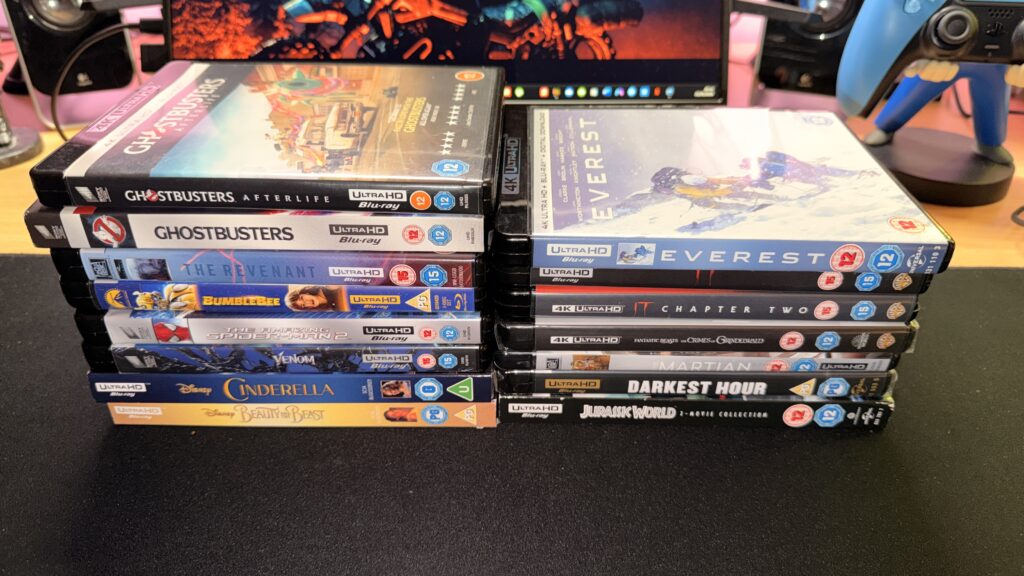
Of course, everyone's needs and expectations will differ wildly. Some may notice significant differences between the formats, while others may not. Whether something's worth the investment and the higher price is subjective. As someone who also buys and owns video games and CDs, I have to balance costs; spending too heavily on one medium affects investment in other areas. If money weren't an option and I could do whatever I wanted, of course, I would invest everything in 4K Ultra HD Blu-Ray. However, as I say that, I'm still worried about its long-term viability due to potential hardware failures and a lack of players in circulation to replace them, even though video game consoles could perhaps plug the hardware gap. Expensive discs, which are vulnerable to scratches, and even factory coatings that struggle to play, make me nervous about the investment.
Conclusion
I decided to reset my 4K Blu-Ray expectations by returning everything to Amazon and starting again. Initially, I thought it would be fine to drop back down to standard HD Blu-Rays and DVDs; however, I quickly missed the audio quality and dynamic sound of 4K Blu-rays. I was fine with Blu-Ray's SDR, but the limited audio options affected me more than I expected.
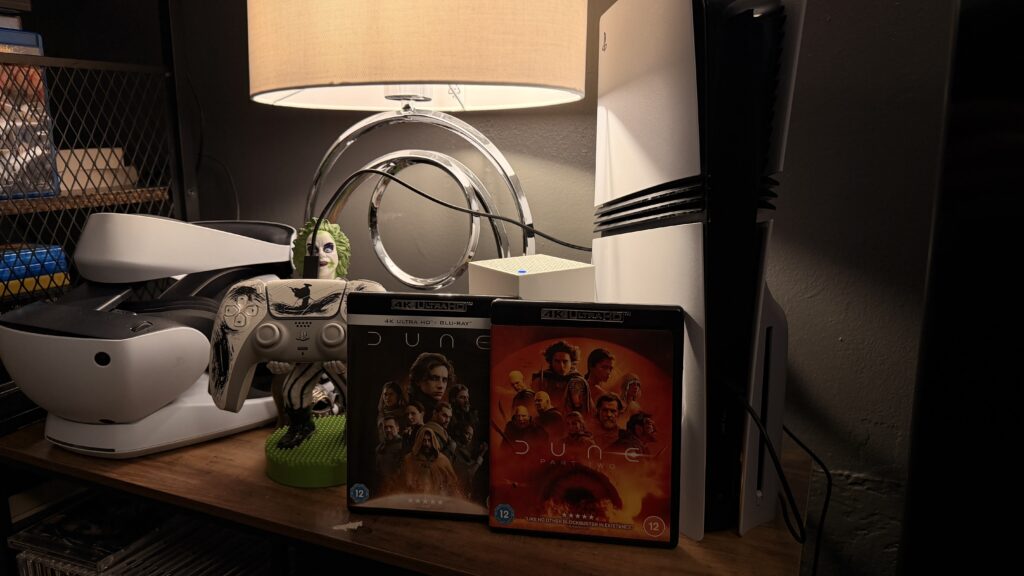
The problem I had when starting my collection was the desire to collect everything; to make the entire collection better! But that wasn't financially sustainable. Instead, I decided to collect a select few movies that were either cheap bargains, some of my favourites, or had audio upgrades that made the purchase worthwhile. To save money for now and focus on steadily building a collection, I decided to use the PS5 Pro with a 4K UHD disc drive that supports HDR10 but not HDR10+ or Dolby Vision; it does have Dolby Atmos, the premium immersive audio experience. Eventually, I will either repurchase the £349 Panasonic UB820 4K Blu-Ray Player or the cheaper £199 Panasonic UB450 4K Blu-Ray player, both of which feature HDR10, HDR10+, Dolby Vision, and Dolby Atmos. But for now, I would rather invest the money in acquiring movies, rather than upgrading hardware.
Update (1 Week Later)
I had planned to play 4K Blu-rays through the PlayStation 5 Pro console, and as it doesn't have the best reputation for upscaling standard HD Blu-Rays and DVDs, I would use the Samsung BD-5100 Blu-Ray player, which I've been using for years. For those formats, it's always worked brilliantly. I assume the TV's been upscaling HD movies to 4K, but I ran into a problem: the Blu-Ray player has limitations with audio beyond the standard 2.0 (TV speakers). With my enhanced 5.1.4 setup through a soundbar, subwoofer, and rear speakers, the Blu-Ray player wouldn't make the most of them.
Whilst I tried to cut costs and take a simpler path to watching 4K Blu-Rays and enhancing my existing movie collection, I decided to repurchase the Panasonic DP-UB820. It's easy to take something for granted, fail to appreciate its performance, and believe that other hardware can perform just as well. But the reality is that it's not worth going without it. Aside from poorer upscaling and diminished audio features, opting for the PS5 meant missing out on Dolby Vision, a modern HDR standard meant to replicate a movie director's vision, and I had trouble getting the console to play Dolby Atmos audio.
Ultimately, the £349 cost of the Panasonic DP-UB820 wasn't worth saving at the expense of a home-cinema experience. I tried saving, but I lost more than I could cope with in return, so it was better to buy again, knowing the Panasonic DP-UB820 is one of the best 4K Blu-Ray players on the market, with impressive upscaling, colour reproduction and audio features. I considered the Panasonic DP-UB450, which retails for £150 less at £199, but the remote control looked cheap; it has no physical display and could overheat due to insufficient cooling, among other issues. They both support Dolby Atmos and Dolby Vision, but from what I understand, the UB-820 has a superior upscaling chip for HD Blu-Rays.
I learned my lesson from trying to reduce costs by investing in the Panasonic DP-UB820; after all, there's a reason it has a world-renowned reputation for being the go-to enthusiast hardware. After doing some research, it turns out that some users have had reliable experiences with their 4K Blu-Ray players, including those mentioned here, so I'm planning to buy a few more Panasonic DP-UB820s to keep boxed and sealed for the day they might be needed. New players won't always be available as physical media slowly gets phased out. So, it's prudent to prepare for that in advance. When players become rare, not only will they be hard to find but also expensive to buy; perhaps even the used second-hand market will become prohibitively expensive. Of course, that's all hypothetical, but I already know I won't like to drop back to using video game consoles, and that's where future supplies will be found.
Final Setup
- (£999) TV: TCL C7K (QM7K) 75" QD-Mini LED 4K TV HDR Premium 2600, Smart TV Powered by Google TV (Dolby Vision IQ & Atmos, HVA Panel, Audio by Bang & Olufsen, 144Hz Motion Clarity Pro)
- (£429) Audio: Hisense AX5140Q, 5.1.4 CH Soundbar, 4 up-firing speakers, Dolby Atmos, DTS:X, Room fitting tuning, True wireless rear surround speakers, 6.5" wireless subwoofer
- (£349) Video: Panasonic DP-UB820EB 4K Blu-Ray DVD Player for TV, Ultra HD, Dolby Vision, HCX Processor, Dolby Atmos, HDR10+, Hi Res Audio, 4K HDR Pro, 7.1ch analogue output, Wireless LAN Built in
External Content Worth Watching/Reading
Articles
- Rtings: HDR10 vs HDR10+ vs Dolby Vision, What's The Difference?
- Rtings: The 5 Best Soundbars of 2026
- Rtings: Hisense AX5140Q Soundbar Review
- Sound Everywhere: Hisense AX5140Q Sound Bar Review: Immersive 5.1.4 Channel Audio
- Tech Radar: TCL QM7K review: a mid-range mini-LED TV offering great performance for the price
- What Hi Fi: TCL C7K (65C7K) review
- What Hi Fi: Panasonic DP-UB820EB review
- Tech Radar: Panasonic DP-UB820 review: a fantastic, affordable 4K Blu-ray player that's built to last
- AV Forums: Panasonic DP-UB820 4K Blu-ray Player Review
Videos
- Rtings: HDR10 vs HDR10+ vs Dolby Vision: Do HDR Formats Matter?
- Warner Bros. Entertainment: Training Day | 4K Side By Side Preview | Warner Bros. Entertainment
- Digital Trends: Blu-ray’s Not Dead Yet: Should You Buy a 4K Player? | You Asked Ep. 86
- Jeff Rauseo: Training Day 4K UHD Blu-ray Review
- My moonization: Comparison of Gladiator 4K SDR vs Gladiator 2009 Blu-Ray Edition
- HDTVs and More: Panasonic DP-UB820 4K Blu-ray Player: Two Year Update - The Verdict
- Average Guy HiFi: Getting frustrated with 4K UHD Blu-ray Players. Let’s Chat..
- Home Video Hangouts: Ultimate Comparison Between Panasonic Ub820, PS5 and Xbox Series X For Watching Movies
- Jeff Rauseo: The NEW Budget 4K Blu-ray Player Everyone Needs | Panasonic UB450 Review
- DobezMusic: Why I Chose The Panasonic DP-UB450P-K Over The DP-UB820 - Play Tests And 1 Month Review of The 450
- Techno Dad: 4K on a Budget? This $200 Player Has a Game Changing Feature! Panasonic UB450

Jack of all trades, author and YouTube content creator, but also audiobook narrator, podcaster, and web designer. A connoisseur of all manner of geek-laden tasks and activities, from building and maintaining my gaming/production computers to collecting physical media and other cool and interesting products. I like to be proactive, so I’m never bored and constantly amuse myself.